Friday, 22 December 2017
Friday, 8 December 2017
Mobile Tower Radiation Law and Facts- Supreme Court Case
![]() |
| Mobile Tower Near Schools & Residential Areas |
The Supreme Court of India orders BSNL to shut down mobile tower due to cancer - 2017 Harish Chandra Tiwari Vs Union of India https://timesofindia.indiatimes.com/india/man-claims-cell-tower-gave-him-cancer-supreme-court-shuts-it-down/articleshow/58137346.cms
No Mobile Towers in Residential Areas:says High Court of Kerala 2015 https://timesofindia.indiatimes.com/city/kochi/
'Stop work on mobile tower near school - Kerala Human Rights Commission https://timesofindia.indiatimes.com/city/kochi/stop-work-on-mobile-tower-near-school/articleshow/61613191.cms
Report on Mobile Tower Radiation Health Hazards & Solutions by Prof. Girish Kumar IIT Mumbai http://profgirishkumar.blogspot.in/
About Mobile Tower Radiation http://www.solacecare.in/about-electromagneticfield-radiation
International Studies: http://www.solacecare.in/mobile-tower-radiation-shielding-products
Health Hazards: http://www.solacecare.in/cell-tower-radiation-shielding-products
About Mobile Tower Radiation http://www.solacecare.in/about-electromagneticfield-radiation
International Studies: http://www.solacecare.in/mobile-tower-radiation-shielding-products
Health Hazards: http://www.solacecare.in/cell-tower-radiation-shielding-products
Radiation Cases: https://timesofindia.indiatimes.com/city/indore/radiation-due-to-mobile-phone-towers/articleshow/58200530.cms
Mobile Tower Radiation Hazards http://www.hindustantimes.com/health-and-fitness/is-mobile-phone-tower-radiation-a-health-hazard/story-U36Vsl3VpIBQOg043iyvBN.htmlMobile Use links to tumour risk https://timesofindia.indiatimes.com/life-style/health-fitness/health-news/mobile-use-for-10-years-raises-tumour-risk/articleshow/57490535.cms
Latest news and useful links: http://www.solacecare.in/news
Monday, 22 May 2017
Bitcoin - Future of Money in the Cyber Era.
Bitcoin Is Now More
Valuable Than Ever.
![]() |
| Bitcoin Digital Wallet |
Bitcoin value surpasses
gold in one ounce reaching $1,400 and is expected to soar in the coming months and years due to
mainstream adoption in many countries.
The recent "WannaCry" ransomware attacks across the world which attacked millions of
computers and healthcare infrastructures like the NHS UK across the world demanded money in the form of Bitcoin which is a digital currency as ransom
which increased its popularity across the world.
Countries India has witnessed the
boom of many Bitcoin trading platforms like Zebpay, Unocoin, etc. A single trading
platform like Zepbap has around 500000 users which is expected to grow with the impending regulation in the country. India
reported its first ever Bitcoin misappropriation case in the year 2016 in Ahmedabad amounting to Rupees 3.5 crores in Bitcoin.
According to CoinNewsAsia.com,
India aims at official recognition and a Bitcoin tax due to the recent change in Indian bank notes made digital currency
more popular. Engadget
reported Bitcoin use doubled in India this winter when the government
banned both the 500 and 1000 Rupee bank notes.
In April 2017 Japan officially recognized Bitcoin,
and other cryptocurrencies as legal tender. The United
States Securities Exchange Comission which earlier rejected bitcoin exchange
traded fund application in March but said it would be reconsidered. Russia
hopes to recognize cryptocurrencies like Bitcoin as legal tender by 2018.
Other
digital cryptocurrenies like Ethereum, Ripple, Dash, Monero have made gains in its value and popularity among users. Digital currency like Ethereum
has quickly attracted interest from companies like Microsoft and JP Morgan Chase
The blockchain technology which is a public ledger that
records Bitcoin transactions has gained interests from companies like IBM and
other majors which can be used in many other applications like banking, retail, pharmaceuticals etc without the need for
any centralized authority who can manipulate the system due to excess concentration of power
in once centralized authority like centralized banks which have failed over the
years in many countries including the Leeman Brothers in 2008.
![]() |
Bitcoin Mining Farm in Iceland |
Some of the companies where Bitcoin is accepted as a mode of payment include Dell, Microsoft, Electronic Frontier Foundation to name a few. In 2013, Chinese Internet giant Baidu allowed clients of website security services to pay with Bitcoins.
The first Bitcoin ATM was installed in October 2013 in Vancouver, British Columbia, Canada.
| A Bitcoin ATM in California |
To a question by Australian Senate as to how long Bitcoin
would take before it goes mainstream, Mr Antonios a Bitcoin proponent answered. The Internet took
15 years, Cellular Telephone took 10 years, the web took 7 years and the Bitcoin
will take 5 years before going mainstream.
He also added that monopolists like Visa and
Master Card who act as mere intermediaries to exchange money make billions of
dollars in commission for doing nothing should not be given the authority to
regulate the digital payments ecosystem which would be bad for customers,
increase transaction costs and result in manipulation and corruption. This would be something like letting the
railways regulate or monopolize the transport industry by putting brakes on
automobile innovation or allowing the telecom companies to regulate the Internet
and stifle innovation which is bad for consumers and the millions of unbanked
poor in developing countries like India and other places who can use Bitcoin to exchange money across the world without transaction fee or failure of their local banking system in countries like Argentina, Brazil, Greece, Venezuela and more.
Saturday, 13 February 2016
Online Arbitration Services in the Digital Age. Online Dispute Resolution Mechanisms.
Technology and
Electronic modes of communication in Judiciary is the need of the hour to
provide more transparency, efficiency, and effectiveness in the justice
delivery system. Video conferencing and online platforms are gaining momentum globally with the increased bandwidth and 4G services in the country The inefficient system of transporting hardcore criminals
and under trials to the court and back pose serious threats to the society and
the public at large. This also puts a huge financial burden on the part of the
Govt and results in wastage of resources, and hits the common
taxpayer.
Online Dispute Resolution.
Imagine bringing someone like David Coleman physically to the Indian Courts. The "Video Conference" to interact with the accused or the witnesses will be a game changer in judicial proceedings in India in this Digital Age..
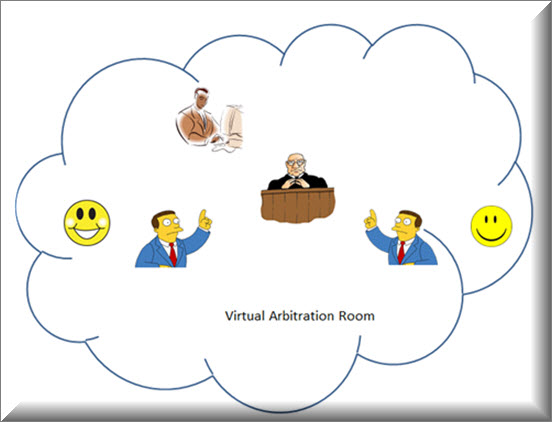
The entire proceedings
in the “Virtual Meeting Room” is recorded with audio and video in the virtual
presence of a representative of the service provider like "Registrar"
certifying the electronic document on behalf of the online platform to make it an
admissible evidence in any Indian Court as per the Indian Evidence Act and the
Information Technology Act. Once the Virtual Arbitration proceedings are
completed, the Registrar will prepare the recording of the proceedings,
digitally sign it and make it available to the stake holders as a soft copy as
required.
Wednesday, 6 January 2016
BTech Students allege discrimination by Companies in Placement Practices. Demand for Central Placement System.
Urgent need for Central Placement System to ensure Justice.
Students belonging to various engineering colleges under BPUT began an agitation demanding a Central Placement Cell similar to Centralized Admission Process in recruitment process by companies to ensure transparency, fairness to less privileged and rural students. Full report http://www.newindianexpress.com/states/odisha/article246057.ece
Companies and HR Managers of major IT companies have been accused by equal opportunity activists, human rights activists, and various other stakeholders that they are literally pampered both financially and by “other services” to recruit students from particular elite self financing colleges run by influential persons and these recruitment numbers are then used to market to potential parents and students in the following academic years to boost admissions and profits in self financing colleges.
No company can claim to be an equal opportunity employer unless equal opportunity is given to its recruitment process to all sections of the society including students studying in rural areas, weaker sections of society who can hardly afford to study in a “five star educational institution” due to their weaker economic status.
A Central Placement System would to a large extent provide empowerment to the weaker sections of the society and also ensure that companies really live up to their corporate motto of being an equal opportunity employer.
No company can claim to be an equal opportunity employer unless equal opportunity is given to its recruitment process to all sections of the society including students studying in rural areas, weaker sections of society who can hardly afford to study in a “five star educational institution” due to their weaker economic status.
A Central Placement System would to a large extent provide empowerment to the weaker sections of the society and also ensure that companies really live up to their corporate motto of being an equal opportunity employer.
As a result of the current placement system in colleges, lesser known institutions, students belonging to weaker sections of the society are losing out and are denied equal opportunity to participate in the recruitment process and obtain jobs. This creates a social malady and social inequalities.
Activists accuse many top tier IT companies as not being an equal opportunity employer when they are denying rural and weaker sections of the society to participate in their recruitment process in a globally competitive era.
Students and parents who have availed bank loans for their higher education are left high and dry due to being denied an opportunity to participate in a fair and equitable recruitment process to obtain jobs.
Thus the current practice of companies and HR managers being financially and by “other means”pampered to conduct campus recruitment only in select engineering and other colleges are discriminatory, unfair, lacks transparency, and should be scrapped henceforth.
Central Placement Cell is the proven solution to this malady such as the one in Delhi University. Click link for more http://placement.du.ac.in/ Visvesvaraya Technological University (VTU) one of the largest Technological Universities in India has been successfully bringing the corporate into a a common placement cell providing job opportunities to all students. More about VTU CPS http://vtucpc.in
Companies including Wipro, BP, Infosys are a part of the Central Placement System to ensure equality, transparency, and fairness to job seekers from various strata of the society. More to follow soon.
A Central Placement Cell would ensure equality, fairness, transparency & would make rural students and weaker sections of the society employable. This would also ensure social empowerment of women and keep the loan sharks away who take advantage of the unemployed youth in the country.
Times of India 2015.
Friday, 18 December 2015
Digital India Initiative 2015
Mission & Target: To take the nation forward Digitally &Economically
Key Vision Areas of Digital India:
- Provide infrastructure as a core utility to every citizen.
- Governance & Services on Demand.
- Digital Empowerment of Citizens.
Digital Infrastructure Utility to Every Citizen:
- Availability of high speed internet as a core utility for delivery of services to citizens.
- Cradle to grave digital identity that is unique, lifelong, online and authenticable to every citizen.
- Mobile phone & bank account enabling citizen participation in digital & financial space.
- Easy access to a Common Service Centre.
- Shareable private space on a public cloud.
- Safe and secure cyber-space.
Governance & Services on Demand:
- Seamlessly integrated services across departments or jurisdictions.
- Availability of services in real time from online & mobile platforms.
- All citizen entitlements to be portable and available on the cloud.
- Digitally transformed services for improving ease of doing business.
- Making financial transactions electronic & cashless
- Leveraging Geospatial Information Systems (GIS) for decision support systems & development.
Digital Empowerment of Citizens:
- Universal digital literacy
- Universally accessible digital resources
- Availability of digital resources/services in Indian languages
- Collaborative digital platforms for participative governance
- Citizens not required to physically submit Govt. documents/certificates.
- Citizens can share ideas, interact on website www.mygov.in
Summary/Three Core Components:
- To sum up, Digital India is an initiative by the Modi Govt to ensure that Govt services are made available to citizens electronically by improving online infrastructure and by increasing Internet connectivity.
- Rural areas to be connected with high speed-Internet networks.
- The creation of digital infrastructure
- Delivering services digitally.
- Digital Literacy to reduce the Digital Divide.
Project Execution:
- To be executed under the public private partnership monitored by the respective ministries.
- The DI initiative shall be extended to public health care, education, judicial services under the respective ministries.
Nine Pillars of DI Programme:
- Broadband Highways
- Universal Access to Mobile Connectivity
- Public Internet Access Programme
- e-Governance – Reforming Government through Technology
- eKranti - Electronic delivery of services
- Information for All
- Electronics Manufacturing
- IT for Jobs
- Early Harvest Programmes
Infrastructure:
- Broadband in 2.5 lakh villages, universal phone connectivity.
- Optical fibre cables have been laid out in more than 68000 village panchayats.
- Public Internet Access Points, Wi-fi in 2.5 lakh schools, all universities; Public wi-fi hotspots for citizens.
- Across government India to be leader in IT use in services – health, education, banking Digitally empowered citizens.
- public cloud, internet access.
- This will provide the first basic setup to achieve towards Digital India and is expected to be completed by 2017.
Services to be offered under Digital India:
- Digital Locker, e-education, e-health, e-sign and national scholarship portal.
- Digital Locker facility will help citizens to digitally store their important documents like PAN card, passport, mark sheets and degree certificates.
- Digital Locker will provide secure access to Government issued documents. It uses authenticity services provided by Aadhaar. It is aimed at eliminating the use of physical documents and enables sharing of verified electronic documents across government agencies.
Private Public Partnerships:
- Investments via partnerships
- At the launch ceremony of Digital India Week by Prime Minister Narendra Modi, top CEOs from India and abroad committed to invest ₹4.5 lakh crore (US$68 billion) towards this initiative.
- The CEOs said the investments would be utilitized towards making smartphones and internet devices at an affordable price in India which would help generate jobs in India as well as reduce the cost of importing them from abroad.
Investments made to Digital India:
Twitter https://twitter.com/techlegalworld
https://www.facebook.com/Techlegalworld-431988290170438/
Youtube: https://youtu.be/6MuEu7cXjxo
- Reliance Industries to invest ₹2.5 lakh crore (US$38 billion) across different Digital India heads, to create jobs for over five lakh people.
- Start Up Fund' to encourage young entrepreneurs who are setting up businesses focused around the Digital India initiative.
- Bharti Group to invest more than ₹1 lakh crore (US$15 billion) in the next five years to create deeper infrastructure in rural and urban India in the areas of e-health and e-education.
Project Execution:
- Facecebook, Google, Microsoft and others to support the Digital India initiative.
- Tech Giants from Silicon Valley, San Jose, California expressed their support for Digital India during PM Narendra Modi’s visit in September 2015.
- FB promised to work on WiFi Hotspots in rural India.
- Google committed to provide broadband connectivity on 500 railway stations in India.
- Microsoft agreed to provide broadband connectivity to five hundred thousand villages in India and make India its cloud hub through Indian data centres.
- Qualcomm announced an investment of $150 million in Indian Start Ups.
Our Ancestors used to play with
snakes but we play with the Mouse! Prime Minister Narendra Modi.
Content Courtesy www.techlegalworld.com
Twitter https://twitter.com/techlegalworld
https://www.facebook.com/Techlegalworld-431988290170438/
Subscribe to:
Posts (Atom)