Make Money Online now!

Support independent publishing: Buy this e-book on Lulu.

Saturday, 13 February 2016

Online Arbitration Services in the Digital Age. Online Dispute Resolution Mechanisms.

Technology and Electronic modes of communication in Judiciary is the need of the hour to provide more transparency, efficiency, and effectiveness in the justice delivery system. Video conferencing and online platforms are gaining momentum globally with the increased bandwidth and 4G services in the country  The inefficient system of transporting hardcore criminals and under trials to the court and back pose serious threats to the society and the public at large. This also puts a huge financial burden on the part of the Govt and results in wastage of resources, and hits the common taxpayer.
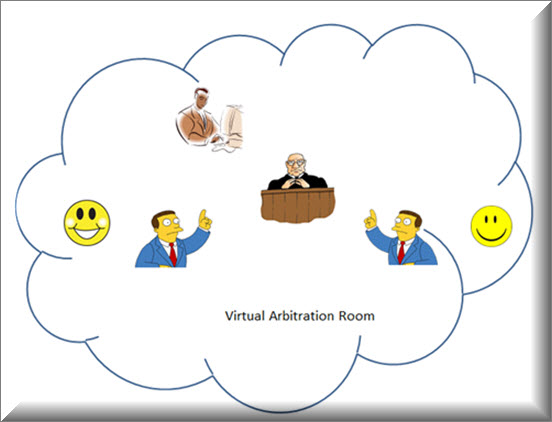
Online Dispute Resolution.


Imagine bringing someone like David Coleman physically to the Indian Courts. The "Video Conference" to interact with the accused or the witnesses will be a game changer in judicial proceedings in India in this Digital Age.. 

The entire proceedings in the “Virtual Meeting Room” is recorded with audio and video in the virtual presence of a representative of the service provider like "Registrar" certifying the electronic document on behalf of the online platform to make it an admissible evidence in any Indian Court as per the Indian Evidence Act and the Information Technology Act. Once the Virtual Arbitration proceedings are completed, the Registrar will prepare the recording of the proceedings, digitally sign it and make it available to the stake holders as a soft copy as required.  

Wednesday, 6 January 2016

BTech Students allege discrimination by Companies in Placement Practices. Demand for Central Placement System.

Urgent need for Central Placement System to ensure Justice.

Students belonging to various engineering colleges under BPUT began an agitation demanding a Central Placement Cell similar to Centralized Admission Process in recruitment process by companies to ensure transparency, fairness to less privileged and rural students. Full report  http://www.newindianexpress.com/states/odisha/article246057.ece 

Companies and HR Managers of major IT companies have been accused by equal opportunity activists, human rights activists, and various other stakeholders that they are literally pampered both financially and by “other services” to recruit students from particular elite self financing colleges run by influential persons and these recruitment numbers are then used to market to potential parents and students in the following academic years to boost admissions and profits in self financing colleges. 

No company can claim to be an equal opportunity employer unless equal opportunity is given to its recruitment process to all sections of the society including students studying in rural areas, weaker sections of society who can hardly afford to study in a “five star educational institution” due to their weaker economic status.

A Central Placement System would to a large extent provide empowerment to the weaker sections of the society and also ensure that companies really live up to their corporate motto of being an equal opportunity employer. 

As a result of the current placement system in colleges, lesser known institutions, students belonging to weaker sections of the society are losing out and are denied equal opportunity to participate in the recruitment process and obtain jobs. This creates a social malady and social inequalities. 

Activists accuse many top tier IT companies as not being an equal opportunity employer when they are denying rural and weaker sections of the society to participate in their recruitment process in a globally competitive era. 

Students and parents who have availed bank loans for their higher education are left high and dry due to being denied an opportunity to participate in a fair and equitable recruitment process to obtain jobs.  

Thus the current practice of companies and HR managers being financially and by “other means”pampered to conduct campus recruitment only in select engineering and other colleges are discriminatory, unfair, lacks transparency, and should be scrapped henceforth. 

Central Placement Cell is the proven solution to this malady such as the one in Delhi University. Click link for more http://placement.du.ac.in/  Visvesvaraya Technological University (VTU) one of the largest Technological Universities in India has been successfully bringing the corporate into a a common placement cell providing job opportunities to all students. More about VTU CPS http://vtucpc.in

Companies including Wipro, BP, Infosys are a part of the Central Placement System to ensure equality, transparency, and fairness to job seekers from various strata of the society. More to follow soon.

A Central Placement Cell would ensure equality, fairness, transparency & would make rural students and weaker sections of the society employable. This would also ensure social empowerment of women and keep the loan sharks away who take advantage of the unemployed youth in the country.  
Times of India 2015.

Friday, 18 December 2015

Digital India Initiative 2015

Mission & Target: To take the nation forward Digitally &Economically

Key Vision Areas of Digital India: 
  • Provide infrastructure as a core utility to every citizen.
  • Governance & Services on Demand.
  • Digital Empowerment of Citizens.
Digital Infrastructure Utility to Every Citizen:
  • Availability of high speed internet as a core utility for delivery of services to citizens.
  • Cradle to grave digital identity that is unique, lifelong, online and authenticable to every citizen.
  • Mobile phone & bank account enabling citizen participation in digital & financial space.
  • Easy access to a Common Service Centre.
  • Shareable private space on a public cloud.
  • Safe and secure cyber-space.

Governance & Services on Demand:

  • Seamlessly integrated services across departments or jurisdictions.
  • Availability of services in real time from online & mobile platforms.
  • All citizen entitlements to be portable and available on the cloud.
  • Digitally transformed services for improving ease of doing business.
  • Making financial transactions electronic & cashless
  • Leveraging Geospatial Information Systems (GIS) for decision support systems & development.

Digital Empowerment of Citizens:

  • Universal digital literacy
  • Universally accessible digital resources
  • Availability of digital resources/services in Indian languages
  • Collaborative digital platforms for participative governance
  • Citizens not required to physically submit Govt. documents/certificates.
  • Citizens can share ideas, interact on website www.mygov.in 

Summary/Three Core Components:

  • To sum up, Digital India is an initiative by the Modi Govt to ensure that Govt services are made available to citizens electronically by improving online infrastructure and by increasing Internet connectivity. 
  • Rural areas to be connected with high speed-Internet networks.
  • The creation of digital infrastructure
  • Delivering services digitally.
  • Digital Literacy to reduce the Digital Divide.

Project Execution:

  • To be executed under the public private partnership monitored by the respective ministries.
  • The DI initiative shall be extended to public health care, education, judicial services under the respective ministries.

Nine Pillars of DI Programme:

  • Broadband Highways
  • Universal Access to Mobile Connectivity
  • Public Internet Access Programme
  • e-Governance – Reforming Government through Technology
  • eKranti - Electronic delivery of services
  • Information for All
  • Electronics Manufacturing
  • IT for Jobs
  • Early Harvest Programmes
Infrastructure:

  • Broadband in 2.5 lakh villages, universal phone connectivity.
  • Optical fibre cables have been laid out in more than 68000 village panchayats.
  • Public Internet Access Points, Wi-fi in 2.5 lakh schools, all universities; Public wi-fi hotspots for citizens.
  • Across government India to be leader in IT use in services – health, education, banking Digitally empowered citizens.
  • public cloud, internet access.
  • This will provide the first basic setup to achieve towards Digital India and is expected to be completed by 2017.
Services to be offered under Digital India:

  • Digital Locker, e-education, e-health, e-sign and national scholarship portal.  
  • Digital Locker facility will help citizens to digitally store their important documents like PAN card, passport, mark sheets and degree certificates. 
  • Digital Locker will provide secure access to Government issued documents. It uses authenticity services provided by Aadhaar. It is aimed at eliminating the use of physical documents and enables sharing of verified electronic documents across government agencies.

Private Public Partnerships:

  • Investments via partnerships
  • At the launch ceremony of Digital India Week by Prime Minister Narendra Modi, top CEOs from India and abroad committed to invest ₹4.5 lakh crore (US$68 billion) towards this initiative. 
  • The CEOs said the investments would be utilitized towards making smartphones and internet devices at an affordable price in India which would help generate jobs in India as well as reduce the cost of importing them from abroad.

Investments made to Digital India:

  • Reliance Industries to invest ₹2.5 lakh crore (US$38 billion) across different Digital India heads, to create jobs for over five lakh people. 
  • Start Up Fund' to encourage young entrepreneurs who are setting up businesses focused around the Digital India initiative.
  • Bharti Group to invest more than ₹1 lakh crore (US$15 billion) in the next five years to create deeper infrastructure in rural and urban India in the areas of e-health and e-education.
Project Execution:
  • Facecebook, Google, Microsoft and others to support the Digital India initiative.
  • Tech Giants from Silicon Valley, San Jose, California expressed their support for Digital India during PM Narendra Modi’s visit in September 2015. 
  • FB promised to work on WiFi Hotspots in rural India.
  • Google committed to provide broadband connectivity on 500 railway stations in India.
  • Microsoft agreed to provide broadband connectivity to five hundred thousand villages in India and make India its cloud hub through Indian data centres. 
  • Qualcomm announced an investment of $150 million in Indian Start Ups.

Our Ancestors used to play with snakes but we play with the Mouse! Prime Minister Narendra Modi.

Monday, 2 November 2015

Social Media Law for Netizens - book release by Professor Richard Hay Member of Parliament

The book titled Social Media Law for Netizens – A Legal Guide to Internet Law was released by Honorable Member of Parliament Prof. Richard Hay on November 1, 2015.  A copy of the book was presented to Prof. Richard Hay MP by the author Jude V Dsouza. 
The book aims at educating the average Internet user about the legal risks involved in the Social Media and the legal pitfalls of the fast moving Internet landscape which can be a legal landmine for Netizens globally.  The eBook is available on Amazon.com and other online platforms which can be downloaded and read on various digital devices like Amazon Kindle, iPad, Laptop, Tablet, Desktop and Smartphone. 

Download the eBook from Amazon:  http://www.amazon.com/gp/product/B013OIN9AM 

Prof. Richard Hay was in Kochi, also known as the "Queen of the Arabian Sea", to attend the Anglo-Indian Family meeting organized by the Bharatiya Minority Morcha, Ernakulam Committee on November 01, 2015.  

Prof. Richard also visited the 90-year-old St. Joseph’s Church in Thevara, the first in Kerala to offer novenas to St. Jude in Malayalam.

Thursday, 24 September 2015

Social Media Law for Netizens - A Legal Guide to Internet Law

Technology and innovation are moving so fast that the law fails to keep up with these developments. Netizens in this “Digital Age” need to be aware of legal risks involved in the social media and the pitfalls in the highly litigious Internet landscape.  There have been instances where individuals have been arrested by the police for “Sharing and Liking” a Facebook post like the one that took place in India which created a furore among free speech activists. Academicians are worried about rampant plagiarism among school and college students where assignments are blindly copied from the Internet and passed off as their own work which kills creativity and amounts to academic fraud resulting in disciplinary action.  
To download this must read book in today's Digital Age check out the link Download the eBook now! A Must-Read for all in this WhatsApp Age! Click here now ! 

The laws and regulations pertaining to the Internet and the social media have become too intricate for the common user to comprehend due to its technicality, constant innovation and dynamic nature. With the advent of tracking technology in place, anonymity and privacy have taken a back seat making life difficult for whistle-blowers and Internet activists. 

The above book is a must read in this WhatsApp age for students, parents, teachers, academicians, judges, law enforcement, and others.


Friday, 17 October 2014

Right To Be Forgotten Online. Privacy Law Vs Freedom of Information.

The recent decision of the European Court of Justice (ECJ) ruling in favor of a Spanish man upholding his "Right To Be forgotten" online has evoked mixed responses from Privacy Activists and Freedom of Information Activists. The European Court of Justice earlier this year ruled that an Individual has the "Right To Be forgotten" online and ordered tech giant Google to remove all previous negative links related to him on its search index. 

The above case filed by a Spanish man before the ECJ related to an old news clipping regarding the debt he owed which he subsequently paid up. He argued before the ECJ that his old debt was history and that the old news item was no longer relevant and his fortunes have changed in the subsequent years and hence demanded removal of those links from Google search results.

The above ruling has snowballed into a debate between Right to Privacy and Freedom of Information or Right to Know.The new decision allows Internet users to request companies like Google, Bing or Yahoo to delete information relating to individuals or entities that may be irrelevant, outdated or inadequate. 

This recent decision has been good news for criminals, stalkers, fraudsters, pedophiles, sexual offenders who can now request any undesirable links related to their crimes be removed from Google searches. But Google said it will evaluate each request in an attempt to create a balance between Privacy Rights of an Individual and the Public Right to Information. 

Subsequent to the ECJ decision Google received over 41,000 requests to be forgotten. These included requests from people accused of various crimes, child porn offenders, and other crimes.

The above decision leaves a dilemma for countries like India without a Privacy Law in place. A link to request the "Right to be Forgotten" can be found at https://support.google.com/legal/contact/lr_eudpa?product=websearch 

Monday, 29 September 2014

Electronic Will or E-Will Services now Available on the Web!

There are two things that are certain in One’s Life. One being Taxes and the second is Death!

Ask anyone who has experienced a “Near Death Experience” in their Real Life or Virtual Life, they will tell you the importance of writing a Will. Writing a Will allows you to distribute your assets both virtual and non-virtual assets to those as per your wish.  In the absence of a Will, your assets will be distributed to your dear ones as per the prevailing laws of the land and not as per your wishes.

For those who are E-illiterates, a traditional brick and mortar lawyer at the corner of the street would suffice to write a will before they “kick the bucket”.  But in today’s Digital Age, E-literates prefer getting their will done on the Web by way of E-Will Services before they “Kick the Mouse”.  


Writing a Will is more important now-a-days and may seem complicated in today’s Digital Environment where most of us have a “Second Life” in the Virtual Environment and own innumerable Digital Assets, like Bitcoins, email documents, attachments, secret messages in our mailbox, cloud, Whatsapp, royalties from photos on Instagram, revenues from Ebooks, Adsense, Websites, Blogs, and more. These digital assets are in addition to our traditional assets like real estate, shares, bank deposits and the like.

In order for a Will to be legally valid there are many legal requirements to be followed failing which a Will can be held invalid in the eyes of law.

And now you can make a Will on the Web with the help of E-will writing services that offer seamless Will services at ease which can be delivered to you via email or at your doorstep in a print format at you convenience. The E-Will is drafted by legal experts taking into consideration the religion and community of the person, wishes, and other factors. The information and data are totally secure and encrypted to ensure confidentiality and privacy.  

So what are you waiting for? Make sure you get your E-Will written before you “Kick the Mouse” and don’t forget to include your digital assets as well.

kick the mouse, kick the bucket, kicking the mouse, kicking the bucket,